

When our students struggle, we need to change our lenses.
HISTORY OF VIOLIN & VIOLA
7 min read
The greatest secret of string pedagogy is that there is no single 'right' way to fix a problem.
From Auer to Menuhin, legendary teachers faced the same fundamental challenges, but they approached them from entirely different angles. Their solutions span the entire spectrum of human movement—from artistic imagination and mechanical precision to holistic balance and coordination.
There is never just one lens for a solution.
I’m Joyce—musician, violist, and lifelong learner. Here, I share teaching ideas and practical resources to help violinists, violists, and music educators teach, practice, and grow with clarity and confidence.
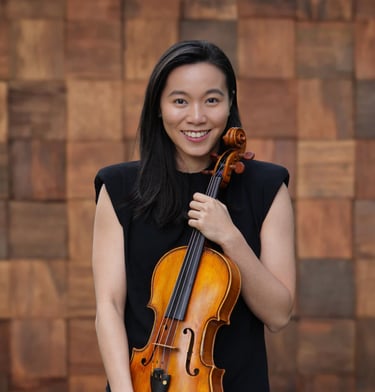


So, when our students struggle, we need to change lenses. Take a simple issue like a messy shift:
Auer: You didn't hear the note before you shifted. Use your "mental ear."
Ševčík: Break down the shift pattern and isolate each micro-movement.
Flesch: Let's look at the geography of your hand. Where is your thumb? Did you maintain your hand frame?
Dounis: Your brain is sending a "squeeze" signal to your palm. Rewire your nervous system with this brain-teaser exercise.
Galamian: Let's look at your timing. Is your bow meeting your left hand? Try lightening the bow pressure during the transit.
Rolland: You are moving your hand, but freezing your body. Get your whole body involved!
Menuhin: Balance your skeletal angle by exhaling as you shift.
Tuttle: Micro-release your chest and neck as you shift. Coordinate the movement.
What shaped their thinking?
Leopold Auer | 1845–1930
“Technique exists to serve expression. Train the ear, shape the imagination, and the hand will learn to follow the artist within. Hear with your 'mental ear.'”
Otakar Ševčík | 1852–1934
“Break violin technique into its smallest cells, master each through repetition, and the larger difficulty will solve itself.”
Creates thousands of exercises to automate shifting, bowing, and finger independence.
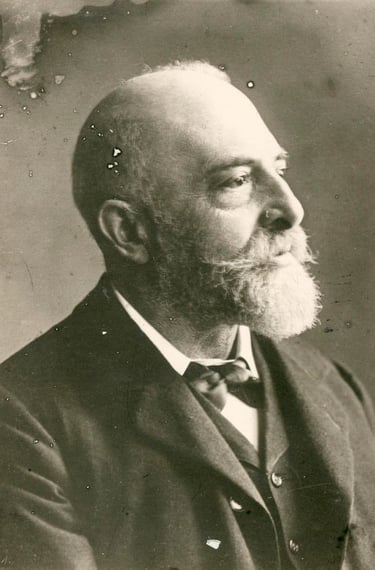
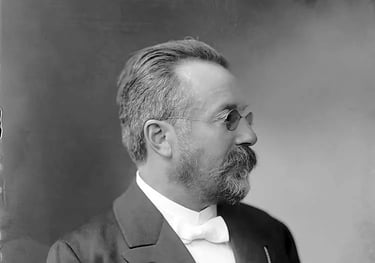
Carl Flesch | 1873–1944
“Technique must be organized by logic and guided by anatomy." His legendary "Scale System" remains the industry standard for mastering the fingerboard.
Dounis | 1886–1954
A medical doctor who viewed technique as a brain-to-muscle connection. He developed "neurological" exercises designed to unlock total finger independence and lightning-fast reflexes.
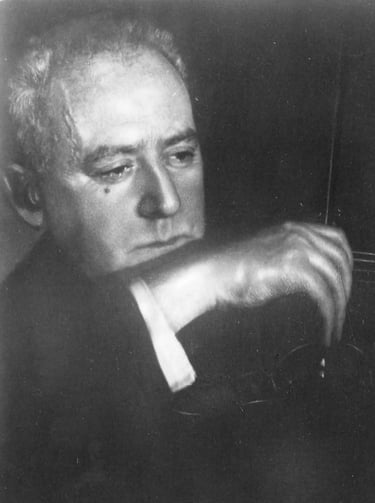
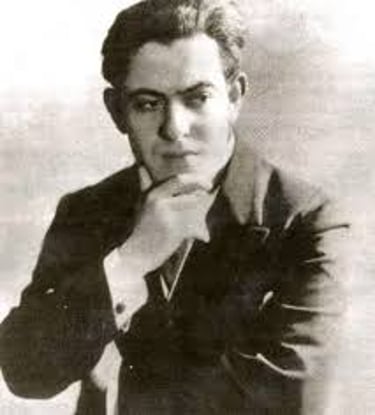
Ivan Galamian | 1903–1981
“Good playing is built on balance: between mind and hand, strength and flexibility, freedom and order. Practice must unite the musical mind and the physical act.”
Paul Rolland | 1911–1978
“Good technique grows from good motion; teach the body to move well, and the playing will follow. The entire body must remain in balanced, fluid motion to play with true freedom."
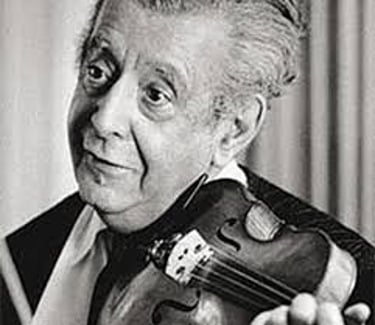
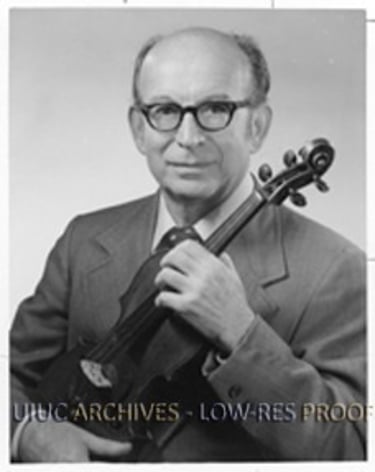
Yehudi Menuhin | 1916–1999
A child prodigy who integrated Yoga and skeletal balance into string playing. He focused on breathing and the "circularity" of motion to ground technique in the body’s natural alignment.
Karen Tuttle | 1920-2010
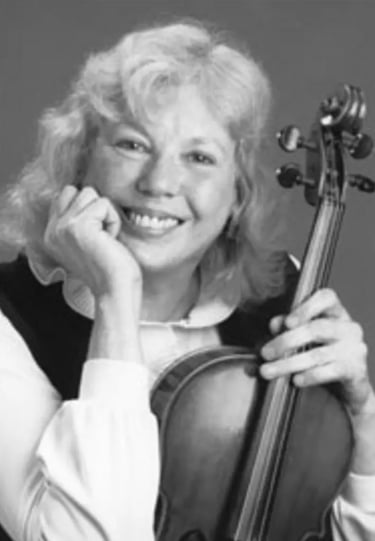
“Release, breathe, and coordinate; the body, the impulse, and the viola must work as one. Free the body, trust the breath, and let expression lead the motion.”
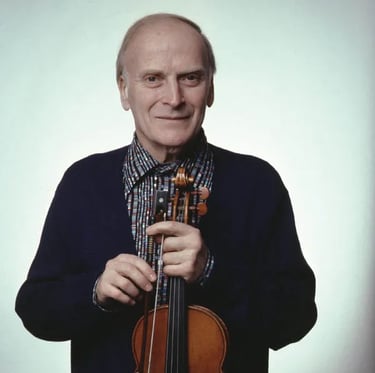
"These teachers developed different solutions to the same playing problems: through imagination, isolation, scales, coordination, motion, balance, and experimentation."
Sometimes the great pedagogues may contrast one another:
Auer puts the ear first, not mechanics.
Rolland's whole-body approach pushes back against Ševčík's localized hand-only teaching.
Menuhin's and Tuttle's coordinated bodily act contradicts Flesch/Ševčík's rigid, force-based, mechanical teaching.
Dounis' micro-coordination contrasts with Rolland's whole-body schools.
At first glance, these approaches can feel incompatible...
BUT
Auer needs Ševčík’s tools when intention alone is not enough.
Ševčík needs Auer’s clarity of intention so that drills do not become empty mechanics.
Flesch provides the structure that helps both find direction.
Rolland, Menuhin, and Tuttle remind us that technique belongs to the whole body, not just the hand.
Dounis reminds us that bodily freedom still requires precise micro-coordination.
Galamian sits between these traditions, reconciling ear, structure, drill, and coordination into a more flexible whole.
There is no one “correct” school.
Each offers a different entry point into the same problems.
Sometimes the great pedagogues may contradict one another, but their disagreement does not weaken pedagogy; it deepens it.
Putting It Into Practice
Détaché
Wohlfahrt Op. 45, No. 1 & 2, Thema: Perfect for beginner to intermediate players to focus on smooth direction changes without the distraction of complex left-hand work.
Mazas Op. 36, Book 1, No. 3: Excellent for practicing broad, singing détaché with string crossings. For students who have learned vibrato.
Kreutzer Etude No. 2: This is the ultimate "blank canvas" etude. Practiced in the upper half, lower half, and whole bow, it is the gold standard for developing an even, core tone.
On-the-string strokes études
Legato
Wohlfahrt Op. 45, No. 1, Var. 6 & 7: A highly accessible study for learning to glue the bow to the string while the left hand moves quickly beneath it.
Mazas Op. 36, Book 1, No. 7: Aptly nicknamed "The Legato," this etude is designed to teach seamless connections and a singing tone.
Kreutzer Etude No. 14: Focuses on long, sweeping slurs across multiple strings, demanding perfectly smooth arm levels to avoid bumps.
Tenuto
Kreutzer Etude No. 1: Practicing this very slowly forces the player to sustain a full, heavy note from frog to tip without the sound wavering.
Fiorillo Etude No. 13: The slow, adagio tempo requires sustained tone and gentle, intentional weight into the string.
Rode Caprice No. 1: The opening Cantabile section is a masterclass in sustaining a vocal, tenuto tone before the technical work begins.
Portato
Kreutzer Etude No. 15: While often played with different bowings, applying a classic portato pulse to these slurred arpeggios builds immense right-hand finger control.
Ševčík Op. 2, Part 1, Bowing Variation 4: Ševčík isolates the mechanical pulse required for portato perfectly in this variation.
Mazas Op. 36, Book 1, No. 8: A deeply expressive study that lends itself beautifully to the gentle glides and presses of the portato stroke.
Martelé
Kreutzer Etude No. 6: The classic martelé study. It trains the necessary "bite" at the beginning of the note and the immediate release of pressure.
Kreutzer Etude No. 7: Takes the martelé concept and adds rapid string crossings, forcing the player to set the bow quickly on the new string.
Kayser Op. 20, No. 3: A brilliant intermediate study to build the energized beginning and clean stop required for this stroke.
Tremolo
Ševčík Op. 2, Part 1, Bowing Variation 28: Provides a structured, rhythmic way to build the relaxed, fast wrist motion needed for a shimmering tremolo.
Casorti Op. 50, "The Techniques of Bowing": Contains specific, targeted drill sections for developing an even, untightened tremolo.
Kreutzer Etude No. 1 (Applied): Standard etude books rarely have a dedicated piece just for tremolo. Playing Kreutzer No. 1 entirely in tremolo at the tip is a classic conservatory trick to build wrist stamina.
Collé
Wohlfahrt No. 16 (Applied): Have the student play these separated notes entirely in the lower half of the bow using only the fingers to pinch and release the string.
Mazas No. 2 (Applied): Apply the same lower-half finger stroke to this slightly more advanced harmonic progression.
Kreutzer No. 7 (Applied): Playing these rapid string crossings at the frog using only the fingers is the ultimate test of collé flexibility.
Off-the-string strokes études
Staccato
Wohlfahrt No. 4: A simple, direct study for learning to catch and stop the string abruptly.
Mazas No. 4: Adds dynamic contrast and tricky string crossings to the on-the-string staccato stroke.
Kreutzer No. 4: A phenomenal, highly focused study for building short, separated, and highly controlled notes.
Spiccato
Wohlfahrt No. 38: Often the first introduction to a lifted stroke for students. It naturally encourages dropping and lifting the bow near the balance point.
Mazas No. 15: Specifically written to develop a resonant, ringing spiccato stroke.
Kreutzer No. 8: The foundational spiccato etude. It teaches the player how to drop the bow and let the stick do the bouncing naturally.
Sautillé
Wohlfahrt No. 36 (Applied): Played at a very fast tempo, this etude forces the student into a sautillé, where the hair stays close but the stick bounces.
Mazas No. 23: An incredibly effective piece for finding that exact spot just above the balance point where the bow jumps on its own.
Kreutzer No. 2 (Applied): When played at lightning speed with light pressure in the exact middle of the bow, this transforms from a détaché study into a pure sautillé study.
Ricochet
Wohlfahrt No. 45 (Applied): This is an arpeggio study. Have the student play 3 or 4 notes in a single down-bow, dropping the bow and letting it bounce across the strings.
Mazas No. 12 (Applied): Features larger arpeggios perfect for dropping the bow on the bottom string and letting it ricochet to the top.
Kreutzer No. 9 (Applied): Playing these string crossings with a single thrown bow impulse is excellent ricochet training.
Up-bow Staccato
Wohlfahrt No. 24 (Applied): Take this simple string-crossing etude and have the student link 4 notes into a single up-bow with sharp stops in between.
Mazas No. 10: Actually features native, written up-bow staccato runs! A great intermediate test for the stroke.
Kreutzer No. 4 (Applied): Instead of playing single staccato notes, this is famously practiced by grouping 4, 8, or even 16 notes into a single up-bow staccato.
Recent posts
Get my free monthly newsletter for violinists, violists, and music educators. In each edition, you’ll find thoughtful teaching ideas, practical resources, and inspiring reflections to help you teach, practice, and grow with greater clarity and intention.
Subscribe
Copyright © 2026 Joyce Tseng. All Rights Reserved.