
When the Fix Isn’t Working: Change the Lens, Not the Student
HISTORY OF VIOLIN & VIOLA
5 min read
From Auer to Menuhin, legendary teachers faced the same fundamental challenges, but they approached them from entirely different angles. Their solutions span the entire spectrum of human movement, from artistic imagination and mechanical precision to holistic balance and coordination.
The greatest secret of string pedagogy is that there is no single 'right' way to fix a problem.
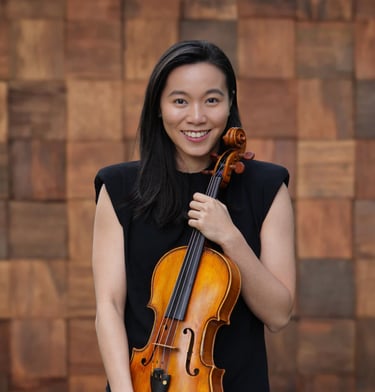
I’m Joyce—musician, violist, and lifelong learner. Here, I share teaching ideas and practical resources to help violinists, violists, and music educators teach, practice, and grow with clarity and confidence.


So, when our students struggle, we need to change lenses. Take a universal issue like a messy shift:
How would the masters suggest we fix it?
Auer: You didn't hear the note before you shifted. Use your "mental ear."
Ševčík: Break down the shift pattern and isolate every micro-movement.
Flesch: Let's look at the geography of your hand. Where is your thumb? Are you maintaining your hand frame?
Dounis: Your brain is sending a "squeeze" signal to your palm. We need to rewire your nervous system with a brain-teaser exercise.
Galamian: Let's look at your timing. Is your bow in sync with your left hand? Try lightening the bow pressure during the transit.
Rolland: You are moving your hand, but freezing your body. You have to get your whole body involved!
Menuhin: Find your skeletal balance by exhaling as you shift.
Tuttle: Coordinate the movement by adding a micro-release in your chest and neck as you shift.
What shaped their thinking?
Leopold Auer | 1845–1930
“Technique exists to serve expression. Train the ear, shape the imagination, and the hand will learn to follow the artist within. Hear with your 'mental ear.'”
Otakar Ševčík | 1852–1934
“Break violin technique into its smallest cells, master each through repetition, and the larger difficulty will solve itself.”
Creates thousands of exercises to automate shifting, bowing, and finger independence.
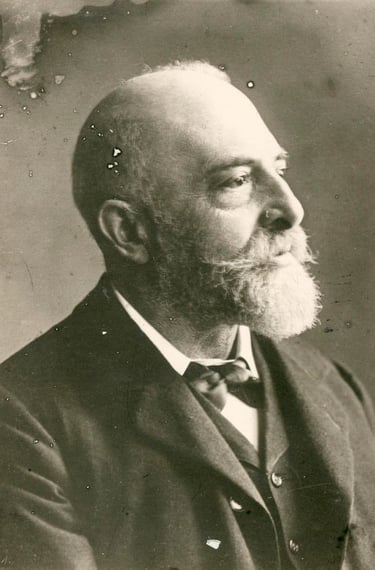
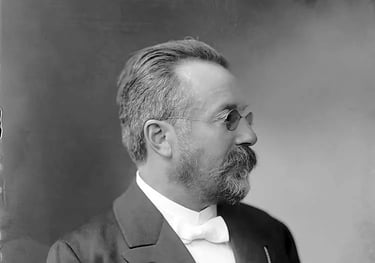
Carl Flesch | 1873–1944
“Technique must be organized by logic and guided by anatomy." His legendary "Scale System" remains the industry standard for mastering the fingerboard.
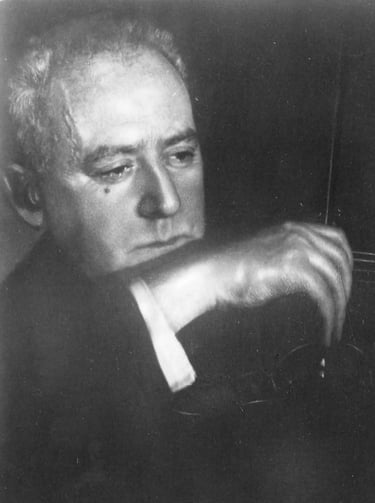
Dounis | 1886–1954
A medical doctor who viewed technique as a brain-to-muscle connection. He developed "neurological" exercises designed to unlock total finger independence and lightning-fast reflexes.
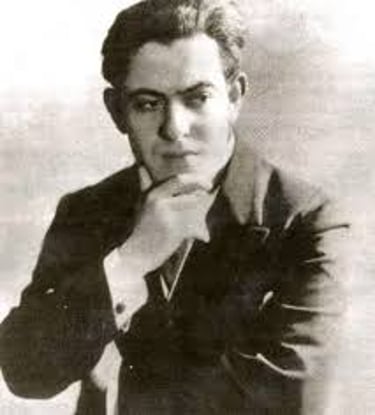
Ivan Galamian | 1903–1981
“Good playing is built on balance: between mind and hand, strength and flexibility, freedom and order. Practice must unite the musical mind and the physical act.”
Paul Rolland | 1911–1978
“Good technique grows from good motion; teach the body to move well, and the playing will follow. The entire body must remain in balanced, fluid motion to play with true freedom."
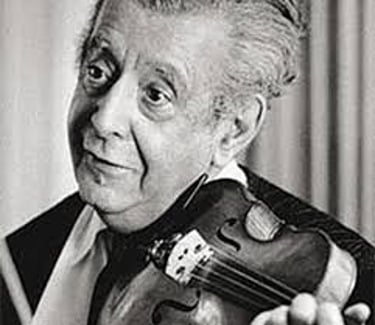
Yehudi Menuhin | 1916–1999
A child prodigy who integrated Yoga and skeletal balance into string playing. He focused on breathing and the "circularity" of motion to ground technique in the body’s natural alignment.
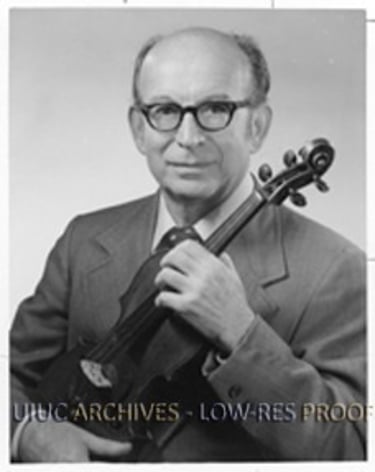
Karen Tuttle | 1920-2010
“Release, breathe, and coordinate; the body, the impulse, and the viola must work as one. Free the body, trust the breath, and let expression lead the motion.”
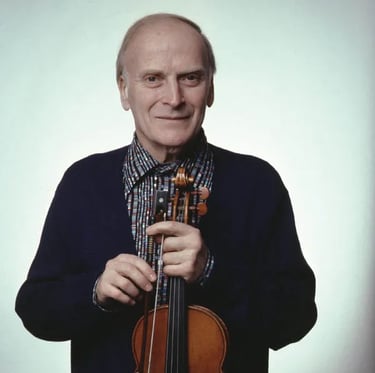
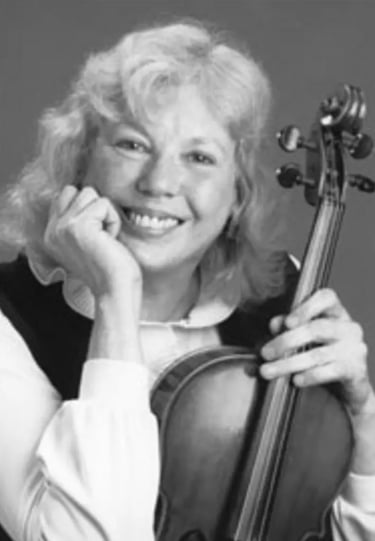
"These teachers developed different solutions to the same playing problems: through imagination, isolation, scales, coordination, motion, and balance"
Sometimes the great pedagogues may contrast one another:
Auer puts the ear first, not mechanics.
Rolland's whole-body approach pushes back against Ševčík's localized hand-only teaching.
Menuhin's and Tuttle's coordinated bodily act contradicts Flesch/Ševčík's rigid, force-based, mechanical teaching.
Dounis' micro-coordination contrasts with Rolland's whole-body schools.
At first glance, these approaches can feel incompatible...
BUT
Auer needs Ševčík’s tools when intention alone is not enough.
Ševčík needs Auer’s clarity of intention so that drills do not become empty mechanics.
Flesch provides the structure that helps both find direction.
Rolland, Menuhin, and Tuttle remind us that technique belongs to the whole body, not just the hand.
Dounis reminds us that bodily freedom still requires precise micro-coordination.
Galamian sits between these traditions, reconciling ear, structure, drill, and coordination into a more flexible whole.
There is no one “correct” school.
Each offers a different entry point into the same problems.
Same symptom. Different lens. Different solution.
Auer: Hear it first.
Ševčík: Isolate it.
Flesch: Organize it.
Dounis: Retrain it.
Galamian: Coordinate it.
Rolland: Free it through motion.
Menuhin: Balance it through breath & alignment.
Tuttle: Release it through coordination.
Recommended Reading
*Disclosure: I get commissions for purchases made through links in this post.
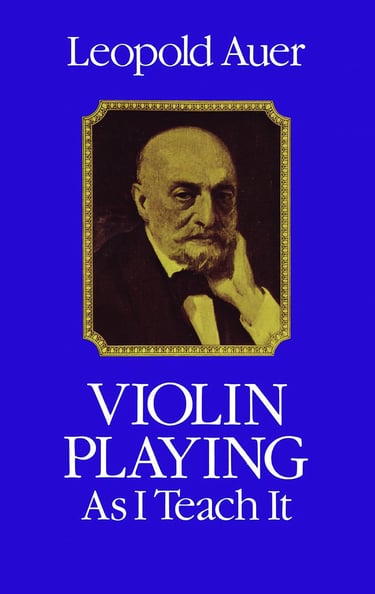
Violin Playing As I Teach It
This book presents legendary violin teacher Leopold Auer’s lifelong insights on technique, practice, performance, and musical artistry, offering detailed guidance for students and teachers based on his experience training great violinists like Jascha Heifetz and Mischa Elman.
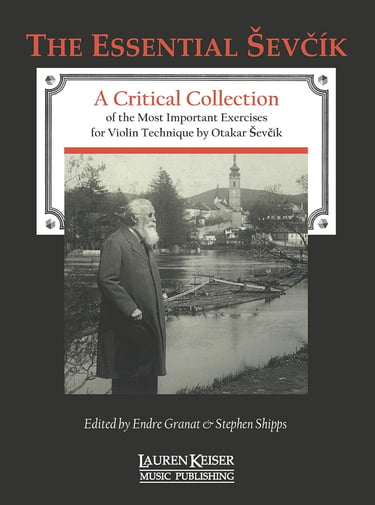
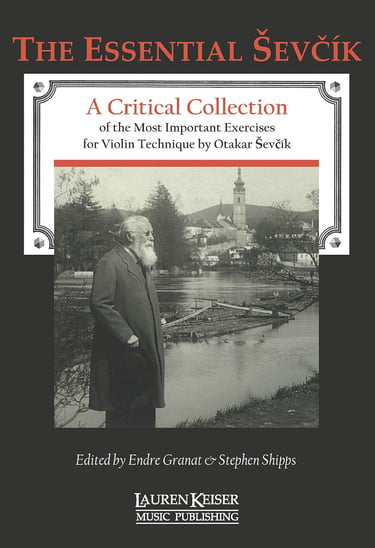
The Essential Sevcik
A single-volume collection of Otakar Ševčík’s most effective technique-building exercises, designed to help violinists develop a disciplined, virtuosic daily practice routine with focused attention to detail.
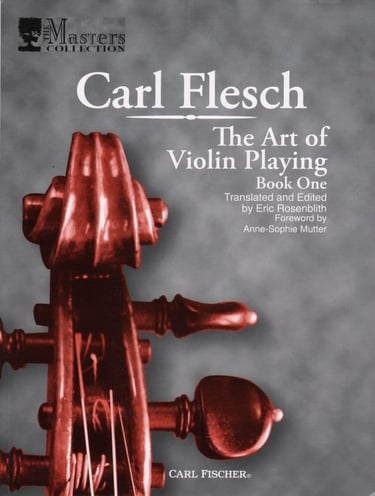
Art of Violin Playing: Book One
A modernized translation of Carl Flesch’s landmark The Art of Violin Playing that preserves his foundational teaching while offering a comprehensive guide to violin technique, from posture and fingering to vibrato, bowing, tone, and musical memory.
The Artist's Technique of Violin Playing
Dounis's The Artist's Technique of Violin Playing contains many advanced exercises intended for playing at the beginning of practice before scales. Finger dexterity and shifting are emphasized in this method.
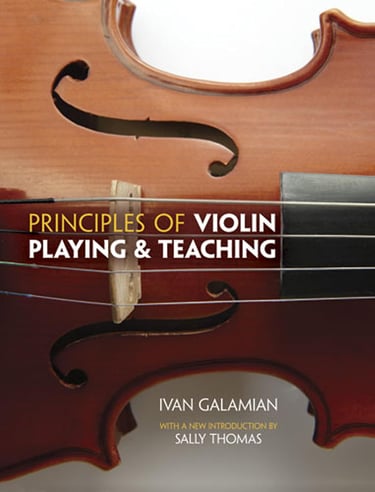
Principles of Violin Playing & Teaching
A classic teaching guide in which Ivan Galamian presents a clear, practical system for violin playing and practice, uniting technique and musical interpretation across every major aspect of performance.
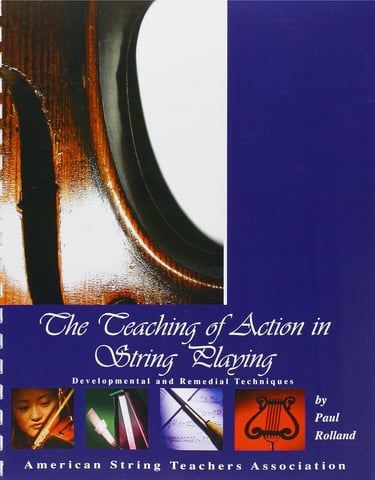
The Teaching of Action in String Playing
A foundational guide to Paul Rolland’s movement-based teaching approach, emphasizing freedom, coordination, rhythm, and flexibility as the basis for healthy and effective string playing.
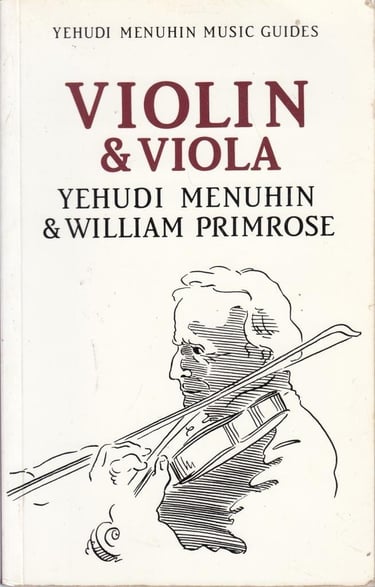


Art of Violin Playing: Book One
A wide-ranging guide to violin and viola playing in which Yehudi Menuhin explores practice, technique, performance, and interpretation, complemented by William Primrose’s insightful monograph on the viola.
The Karen Tuttle Legacy
A practical guide to Karen Tuttle’s Coordination Technique, showing violists how releasing physical and mental tension can lead to healthier playing, greater ease, a freer sound, and more expressive performance.
Recent posts
Get my free monthly newsletter for violinists, violists, and music educators. In each edition, you’ll find thoughtful teaching ideas, practical resources, and inspiring reflections to help you teach, practice, and grow with greater clarity and intention.
Subscribe
Copyright © 2026 Joyce Tseng. All Rights Reserved.